
4 min read
How the Colson Fellows Program Gave a 27-Year Corrections Veteran a New Mission Field
Colson Fellows
:
August 21, 2026
Welcome to the Pursuit, a series documenting the experiences of a Colson Fellow-in-Training as they seek to walk wisely in this time and place. Each segment will provide an insider’s look at what a prospective participant can actually expect should they choose to embark on the journey themselves.
As told to the Colson Center Communications Staff
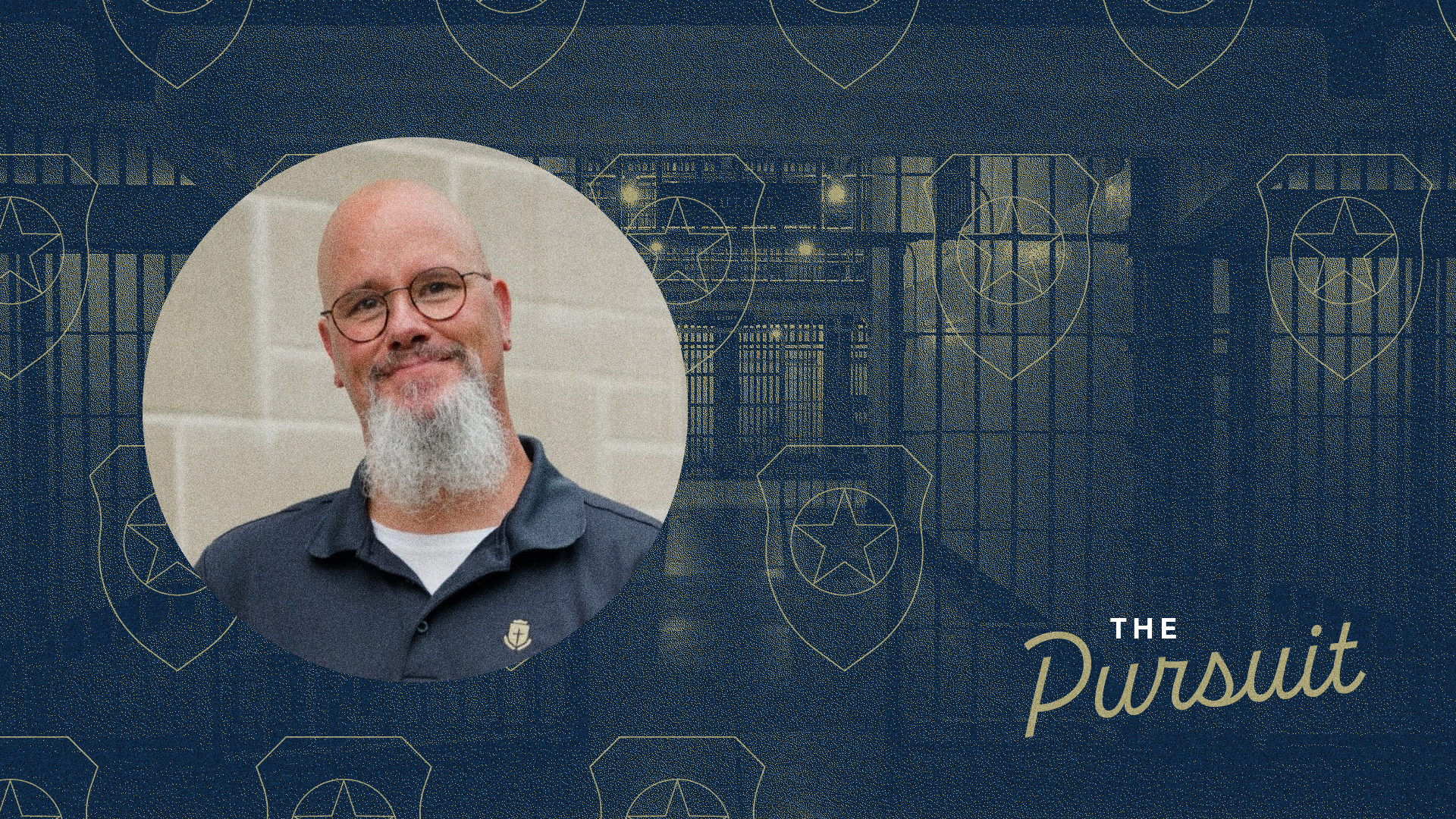
In this segment, we sat down with Jason Zaharis, a husband, dad, and former corrections officer who now runs a nonprofit ministering to prison staff and their families.
Where are you from and what season of life are you in?
I’m from all over, having moved around the U.S. as a kid. But now I live with my family in Birmingham, Alabama. I’m in a good season of change. I moved out of law enforcement after 27 years, with 25 of those years spent working in prisons. I never would have thought I would be doing ministry work, but toward the end of my career I felt there was something more I was supposed to do. I enrolled in an evening program at a small Bible college to better my biblical knowledge and go into ministry. I got my pastoral certification and retired from the federal corrections bureau. I wanted to do ministry for prison staff but wasn’t sure what that would look like.
What challenges do you face in living like a Christian where you are?
In the corrections world, a lot of Christians think they can separate their faith from their work. But we shouldn’t separate our faith or worldview from our jobs just because we’re in a challenging environment. Of all places, we should be living out our faith more there.
The incarcerated are there 24/7. Many of them didn’t have a good upbringing and are used to people treating them badly. If we treat them the same way they’re used to being treated, how will we expect something different from them? Ninety percent of these men and women are going to be released. Do we want them to remember witnessing good role models while they were incarcerated, or not?
Moreover, the correctional field is number one in divorce rates, drug abuse, alcohol abuse, suicide rates, etc. I think part of that comes from trying to be two different people inside and outside of the prison.
How did you hear about the Colson Fellows Program?
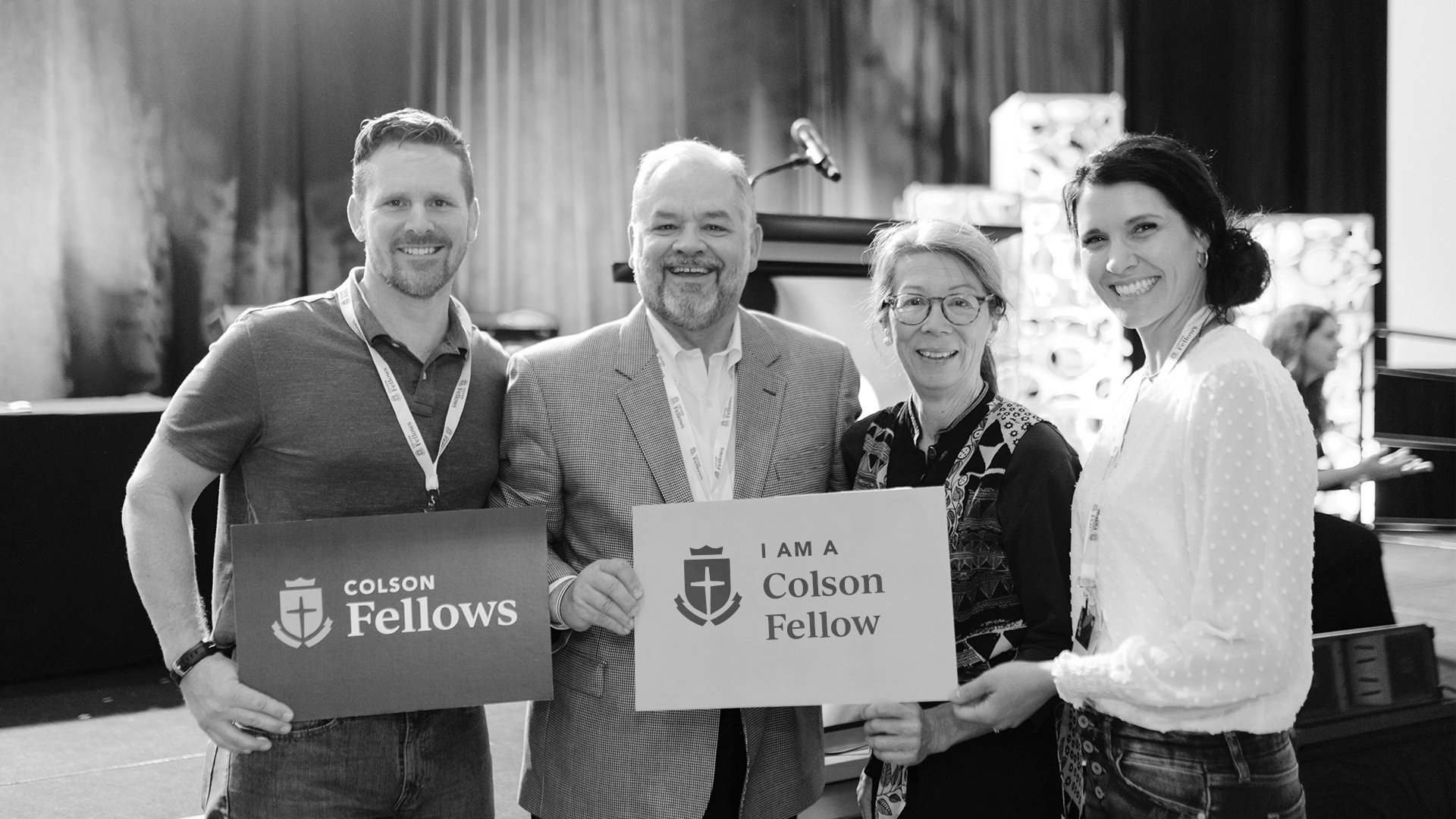
I started a job as a federal chaplain resource manager for Prison Fellowship. During one of our all-staff meetings, we had a guest speaker from the Colson Center who talked about the Colson Fellows Program. I went through the program with my wife and was commissioned in 2024.
What cohort were you in, and what was your experience like with your cohort?
We did the Birmingham cohort and we absolutely loved it. I would encourage participants to do a local cohort if there is one nearby.* My wife and I were able to bounce things off each other. But if I didn’t have her, it would’ve been difficult if I didn’t have a local cohort to engage with. Having other people to talk to and learn from was an amazing part of the program. It was great to learn how we saw things differently.
It didn’t matter how far you were in your own journey with Christ. We had people who had been Christians for as long as they could remember, and people like me, who didn’t really get involved until my 20s. But the program itself provided such an enlightening and solid foundation that I think everyone needs. No matter what you know about the Bible, the way the program breaks it down and explains it is amazing. You will not get a more solid foundation of a biblical worldview than the way it’s taught in the program.
I dove deeper into my faith thanks to the program—and that prompted me to consider starting a nonprofit to help correctional staff and their families. I’ve since registered my nonprofit, launched a website, and am starting to do interviews and go to prisons to talk with staff.
Favorite book or resource from the program?
Nabeel Qureshi’s Seeking Allah, Finding Jesus was extremely eye-opening. He writes about his whole family being Muslim. In that context, there was no doubt that this was what he was supposed to believe and follow. In his college years, his Christian friend challenged him. He accepted Jesus and realized that Islam is not what he had always been taught. I saw a parallel between his life and mine. Like him, I was 100% sure there was no God or Jesus. Like him, I struggled in my 20s. Like him, the more questions I asked the more answers I got that led toward God. My wife and I loved the book.
How has the program impacted your life?
It has built such a good foundation. Now I have a fuller grasp on the Bible. You could be a Christian who has studied the Bible for years, but the Colson Fellows Program gives you a perspective to challenge what you thought you knew. It teaches you to see things through the lens of Creation, Fall, Redemption, and Restoration. It gives you guidance to go back to the basics of the Bible and then move outward. That’s what changed my life. I keep going back to the solid biblical worldview that I was taught.
What would you say to someone considering the Colson Fellows Program?
When you first accepted Jesus, you might have had questions, worries, and concerns. It took faith. So, I would encourage you to do the same with this program. Take that step of faith and try the program. The worst that could happen is you get into it and say, “This is over my head right now.” Take a step and try it and you might be surprised. Hopefully it does for you what it did for me, which is change my entire worldview. If you can’t do it right now, that’s okay. Just pause and come back. But don’t use that as an excuse to not come back and tough it out.
Any tips for managing your time and getting everything done?
Set a time in the morning to be with Jesus. Put it on the calendar and go. Let your family know and make it a steadfast thing to dedicate yourself to. If you can only give 30 minutes one day, that’s okay—but set it as a scheduled timeframe. Just like you have to dedicate time to being in the Word, it’s no different than what you need to do time-management-wise with this program. The biggest part was the reading. You’re going to have to put it on the calendar.
As for your personal mission plan, if you have an idea that you really think God wants you to do, then do it. You might get laughed at. You might go with it and it never materializes—but you at least tried. If I help one correctional officer with my nonprofit, then it will have been successful.
The Colson Fellows Program is designed for busy men and women from all walks of life. Interested in exploring the program? Click the “Request Info” button to learn more.
*The Colson Fellows Program offers both in-person cohorts and online cohorts.
Testimonial edited for clarity.
Considering the Colson Fellows Program?
Request information is easy as filling out the form below!
Request Information